A new study published in the Journal of Environmental Management demonstrates the potential of sustainable substrates in constructed wetland systems – an approach aligned with CIRQUA’s mission to advance nature-based solutions for water treatment in the Mediterranean.
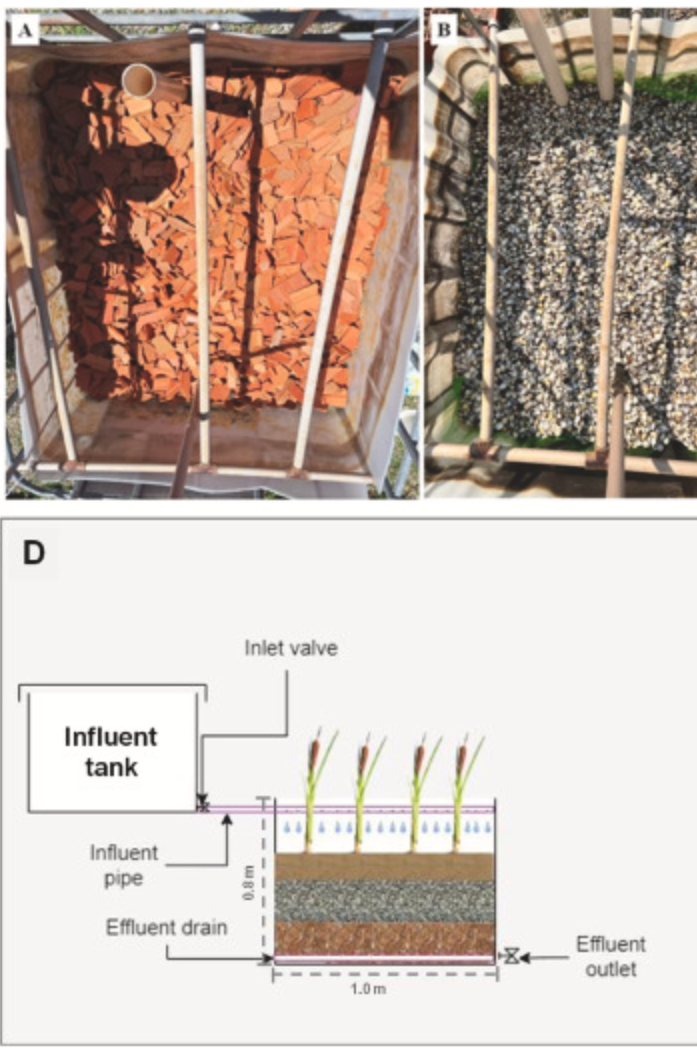
Researchers at the Federal Institute of Ceará (Brazil) developed a pilot-scale tidal flow constructed wetland using a mixture of seashells, ceramic brick fragments, and sand. The system treated synthetic wastewater contaminated with industrial dyes and surfactants, achieving exceptional removal rates: 100% for the azo dye Acid Red 18, over 90% for linear alkylbenzene sulfonate (LAS), and 89% for chemical oxygen demand.
The research highlights several key findings relevant to the CIRQUA project:
Circular economy potential: Using waste materials as filter media reduces costs while repurposing waste streams
Tidal flow advantages: Alternating flooding and draining cycles enhanced oxygen transfer and supported diverse microbial communities
Nutrient recovery: The system achieved 74% ammonia removal and 56% phosphorus retention
These results support the viability of nature-based treatment systems for decentralized wastewater management in rural Mediterranean areas – a core focus of CIRQUA’s research activities.
Reference: Maciel et al. (2025). Journal of Environmental Management, Volume 397.