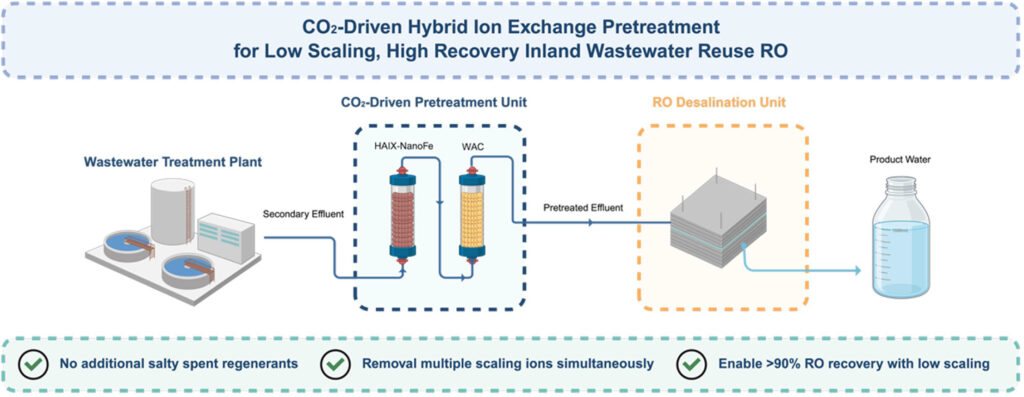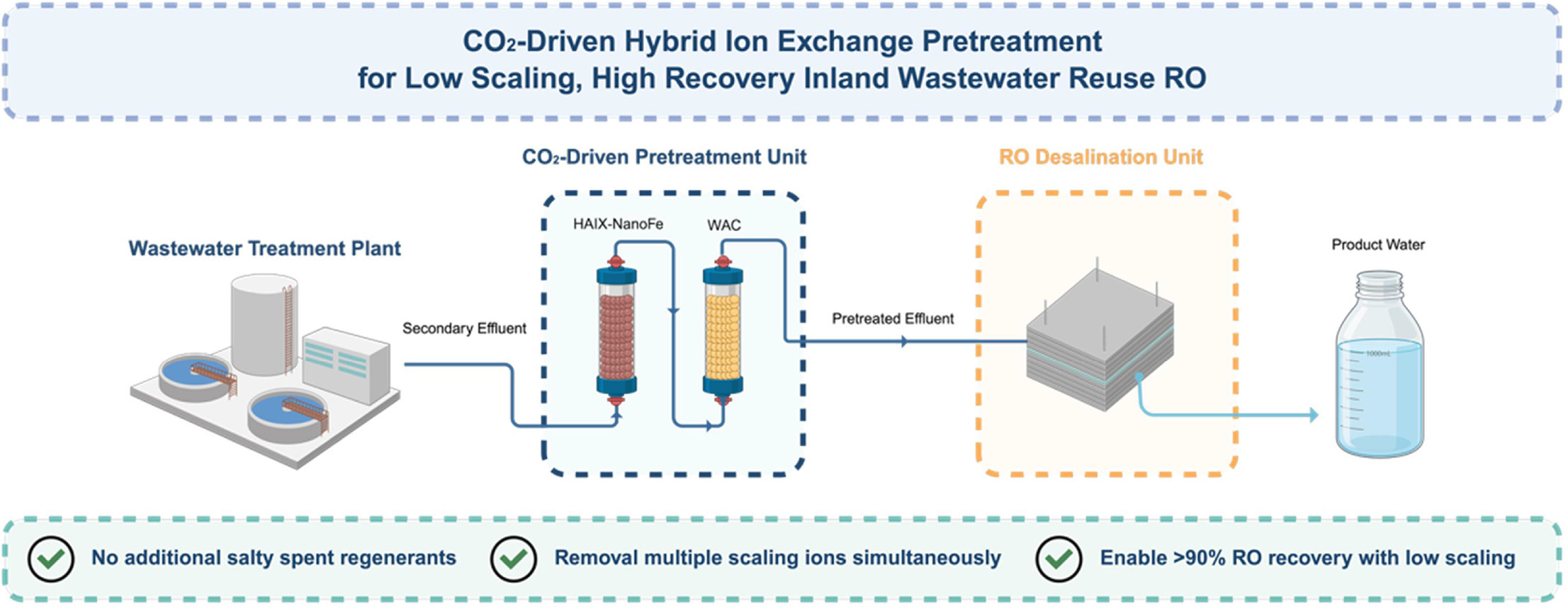
A new study published in Water Research introduces a promising advancement for water reuse systems: a CO₂-driven hybrid ion exchange process designed as a resilient pretreatment for reverse osmosis (RO) membranes.
High-recovery wastewater reuse is critical for addressing water scarcity, particularly in water-stressed regions like the Mediterranean. However, maintaining RO membrane performance while achieving high water recovery rates presents significant technical challenges, including scaling and fouling.
The research demonstrates how using carbon dioxide as a driving force in ion exchange can enhance system resilience and reduce the need for harsh chemical regenerants. This aligns with circular economy principles — using a greenhouse gas productively while improving water treatment efficiency.
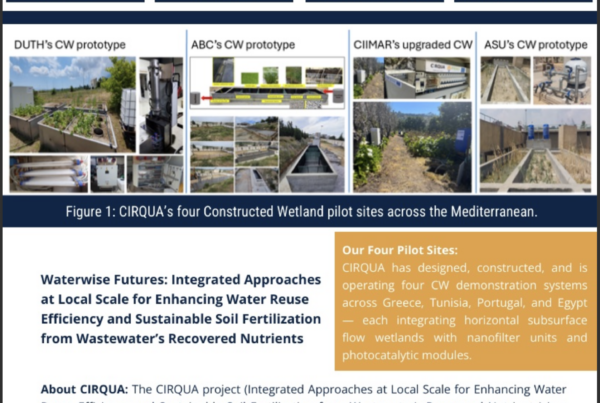
Why this matters for CIRQUA: This innovation directly supports our project’s goals of developing sustainable water reuse technologies. The CO₂-driven approach offers a pathway toward more environmentally friendly and operationally robust treatment systems that could be integrated into constructed wetland-based treatment trains.
🔗 Original article: https://www.sciencedirect.com/science/article/pii/S004313542600014X