A new study published in the Journal of Environmental Management presents a promising solution to one of the persistent challenges in constructed wetland operation: substrate clogging.
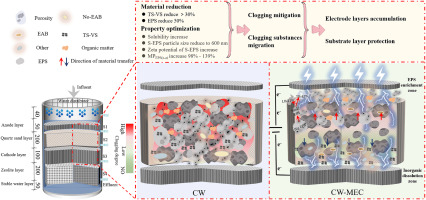
Constructed wetlands (CWs) are widely recognized as cost-effective, nature-based solutions for wastewater treatment. However, their long-term efficiency often declines due to the accumulation of organic matter, extracellular polymeric substances (EPS), and inorganic precipitates within the substrate.
The Innovation: Researchers have developed an innovative CW-MEC (Microbial Electrolysis Cell) coupled system that uses regulated electrification time to mitigate clogging. By testing different electrification periods within an 18-hour hydraulic retention cycle, they found that 9 hours of electrification optimally maintained system performance while protecting the quartz sand substrate layer.
Key Findings:
Vertical spatial migration — understanding how clogging substances move within the system under electric field influence
Sacrificial protection mechanism — where electrode layers protect the critical substrate layer from clogging accumulation
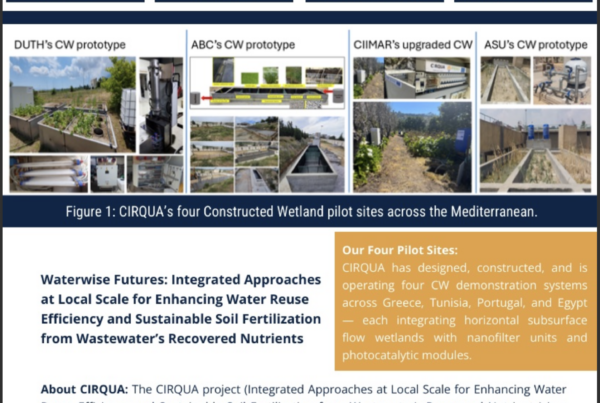
As CIRQUA works to develop and optimize constructed wetlands for water reuse in Mediterranean rural areas, innovations like this bioelectrochemical approach offer valuable insights for improving treatment efficiency and system longevity.